
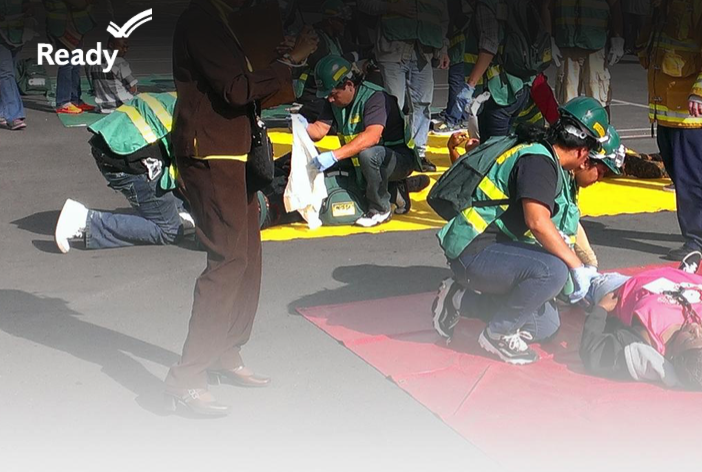
US Federal Community Emergency Response Team (CERT)
Wow! Big topic. I’ve now spent months — no, years — thinking about and working on how those of us who are not severely impacted by an event such as the 2017 NorCal Fires can help our neighbors. I’ve explored our local CERT project, our 211 Information and Referral Service, Recovers.org, our county Office of Emergency Services and VOAD . I go to meetings, review Facebook pages and Twitter, talk to people in grocery store lines. In all these venues the problems and issues converge to the same four points of failure:
communication, information, middle management, scaling
The local San Francisco public radio station, KQED, has been investigating the fire response, most recently in
North Bay Fires: What Took Authorities So Long to Warn People?
Here’s the comment I posted there today (Jan. 25, 2018):
There’s no question that communications were inadequate from the onset of the Wine Country Fires and they still are. I followed the Lake County Fire communications two years ago and have been following this fire since Oct. 9, the morning after the start. While blaming individuals and agencies may serve as an outlet for our anger it doesn’t help solve the problem so that we will be better prepared to respond to the next emergency. @Karen (see comment below) has suggested Sonoma County OES be moved under the Sheriff’s Office. I don’t have an opinion about whether that would be an improvement but I do know that wouldn’t be enough.
I see four points of failure: communication, information, middle management, scaling. I’ll write about each of these in my blog, Musings from Liza Loop. I’m now participating in ROC Sonoma County, the local long-term recovery group being set up to address the needs of fire survivors for the next 3 years. The four failure points emerged immediately on that terrifying night almost four months ago and are still plaguing us. First responders did a heroic job but were overwhelmed as were the “official” recovery response teams. To fill the gap hundreds of us “ordinary citizens” jumped in to address individual pleas from fire victims for shelter, supplies and emotional support. Instead of “playing nice” together most of the governmental and nonprofit agencies treated this army of volunteers as part of the problem rather than part of the solution.
The four failures are eerily similar to what businesses experience when they grow too fast. Business leaders have developed strategies for coping under these circumstances but local government agencies aren’t taking as much advantage of this expertise as they might. Now is the time for serious work on building a functional public-private partnership — as we recover from this most recent disaster and as we prepare for the next one. Shifting responsibility from one government agency to another will not stimulate the kind of “learning organization” behavior we need to create more effective disaster response during both the emergency and recovery phases of a disaster.
If we want to improve our emergency response systems we need to remember that “the government” isn’t some group of alien beings placed on Earth to take care of us. We are the government. We are the ones who must ameliorate the points of failure. Sometimes we do this by becoming “official”, by crossing that invisible boundary between ordinary citizen and elected, appointed or employed government operative. Sometimes we serve on an advisory committee or commission. Sometimes we just attend and speak up at hearings and town hall meetings. Sometimes, as I did, we just jump in and volunteer. However you choose to participate, keep in mind that crossing the boundary doesn’t create instant geniuses who now magically know how to eliminate the points of failure. There’s as much systems knowledge outside the government boundary than there is inside. Let’s ensure that the know-how that is so profitably applied in the private business sector is just as effectively brought to bear for public benefit in the inevitable next disaster.


 Most of governing is a huge void. You can fill that void by exercising your rights and opportunities to control. If you don’t, someone else will, often someone with whom you don’t agree. Elected officials can’t represent the people if the people can’t articulate what they want. Most people have no conscious idea of how they govern themselves, their families, neighborhoods, cities, counties, states, not to mention national governments. Understanding your own values and perspectives at a deep level is key.
 It’s also where the political rubber meets the road. So while the public is enthralled with billion-dollar campaigns for elected office and arguing about which official will view their particular beef favorably, those who wield the real power are introducing themselves to the office staff. “I’d like to volunteer for Committee X or Commission Y.” “I’m available for your next opening as a writer or an analyst.” Public opinion about the use of police
 We equate voting with performing our “civic duty”. We think “government of the people” can be done by making more and more state and federal laws instead of by being mindful of the billions of small action decisions we collectively make on a daily basis.
 The tag line reads: “Since 1979, the federal government has recommended flossing daily to help prevent gum disease and cavities. But according to a new report by the Associated Press, there’s little scientific evidence to support that advice. We’ll drill down into the data, and we want to hear from you: Will the news affect your oral hygiene routine?”
 When dealing with personal health, paying attention to statistical probability tells us only how likely it is that a medication or treatment will help us but tells us nothing about how any one person will respond. The bottom line, on flossing or any other medical recommendation, is to look for a personal solution. The fact that a treatment doesn’t work for 99 out of 100 people does not prove it will not work for you or me.
 Nadia Dennis
 From a societal perspective, it’s probably not a good idea for businesses to piss off their customers. If you do a web search using keywords ‘hate’ and ‘AT&T’ you’ll find plenty of evidence supporting the growing dissatisfaction with the customer service provided by this large corporation. Such frustration is not unique to AT&T. It begins when consumers try to contact the company and must thread their way through a maze of automated options and recorded voices professing delight, sorrow and desire to please. It often ends with a meaningless survey.
 (https://www.globalinnovationexchange.org)

