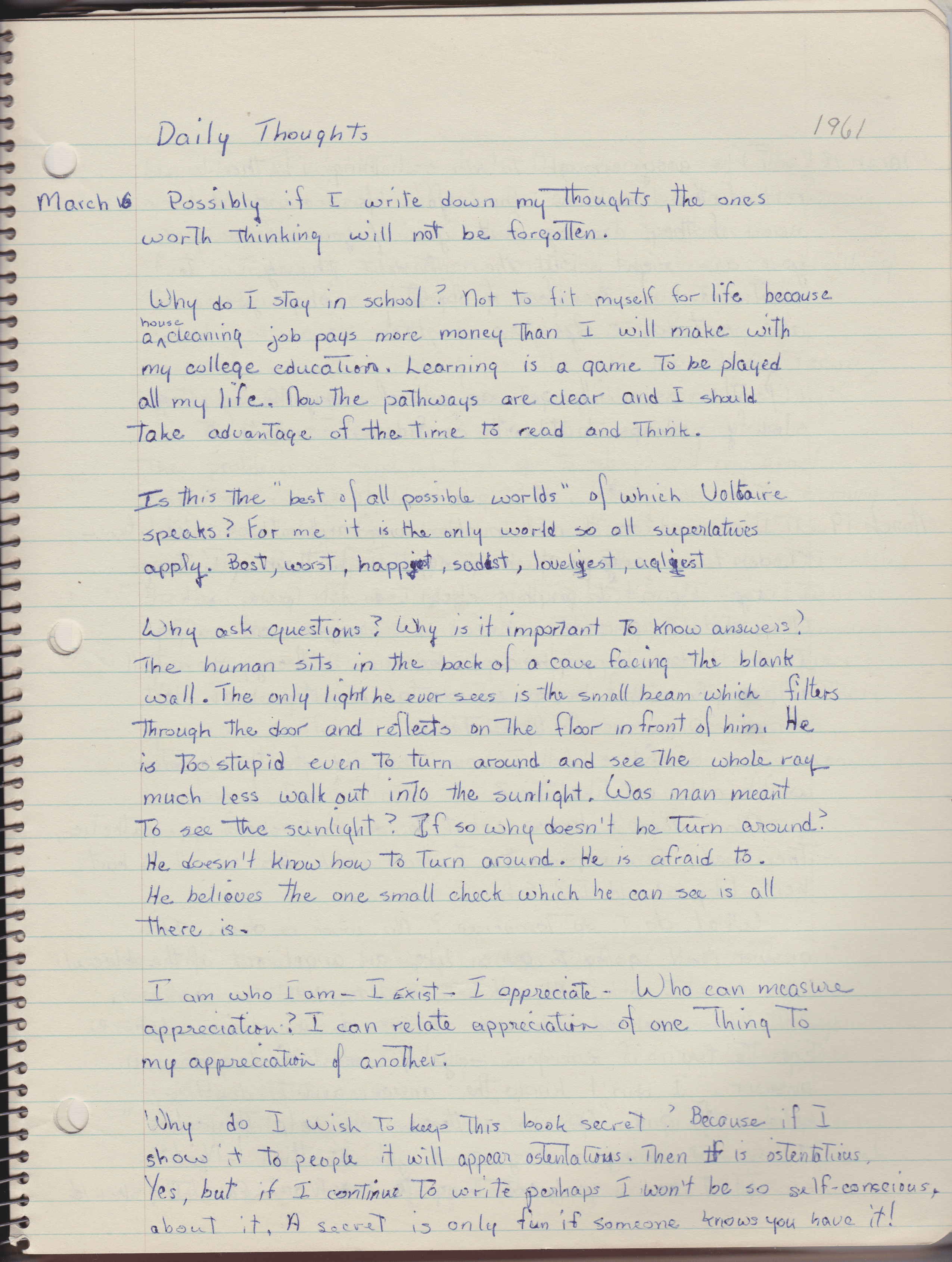
All my life I have felt like an outsider, like I’m an actor on a stage playing a role for an audience. Am I autistic? How would I know? Does it matter?
Am I autistic?
Well, that depends on who is applying the label. People have called me many names but no one has used the terms autism or Asperger’s. When I asked my psychotherapist whether he thought I had Asperger’s syndrome he replied, “Definitely not”. But recently I have been reading what adults diagnosed with some form of autism say and comparing their descriptions with my lifetime of internal experience. There are a lot of pretty close matches.
How would I know?
Here are some clues.
The website https://www.medicinenet.com/what_are_the_signs_of_aspergers_in_adults/article.htm
offers 10 signs of Asperger’s in adults. Keep in mind that there is a lot of disagreement within the medical community about where to draw the line between ‘neurotypical’ and ‘neurodiverse’ but these 10 are usually mentioned.
1. Social awkwardness. Check. As far back as kindergarten I have felt like an outsider, feeling excluded, not knowing how to get myself included, baffled by how to take appropriate turns in a conversation. My peers told me I was “stuck up”, “conceited”, “scary”. I wasn’t disruptive so adults didn’t say anything.
2. Difficulty understanding jokes or sarcasm. Uh huh. Mom used to tell me I was too “literal minded”. And I hated the situation comedies that were (and still are) popular on TV. I thought they were demeaning rather than funny.
3. Challenges in making or keeping friends. That one’s a definite match for me. My response to the pandemic was relief – – “getting in touch with my inner hermit”, I explained to the folks I ran into while out walking my dog. Most of the time I prefer the company of animals rather than humans, although lately my cat has become annoyingly demanding.
4. Sensory and motor issues. This is not such an obvious fit for me. Although…I don’t choose bright lights, avoid rock concerts (loud noises), and dislike perfumes. Food, balance, and coordination are not problems for me but I have a high tolerance for pain and only appreciate some types of touch.
5. Avoidance of eye contact. Bingo! Eye contact frightens me and I have no idea how some people find eyes to be the “windows to the soul”.
6. Lack of adherence to social rules. This ‘sign’ can be difficult to interpret. Although internally I don’t have much respect for social rules, it rarely occurs to me to break them with my actions. Perhaps this is the result of growing up in a household where breaking the rules had severe consequences. Or maybe staying with social rules gives me a sense of routine and security. In my head, on the other hand, there are no social rules.
7. Very strong and particular interests. No question that this describes me. Reading used to keep me up all night. I avoid video games because they are so addicting. Animals are my closest friends. I collect many different things, including genealogical data. Math, science, psychology and puzzles all turn me on.
8. Difficulty with change. Not my issue, at least, not on the surface. This could be because my ‘routines’ are so complex that they look like ‘change’. Or maybe difficulty with change is more salient for people with more chaotic sensory experience, those who find change threatens their need for control and predictability. It might be interesting to look into this further.
9. Strong ability to focus. That I can do. 50 years of fascination with learning and education attests to that. But I’m also quite distractible. I can start out researching one topic and suddenly get sucked into an in depth exploration of something related. I wonder if the difference between ability to focus and ‘attention deficit’ could be a matter of how rapidly focus shifts rather than lack of focus.
10. Strong attention to detail and pattern recognition. For me, it’s deeper than recognizing patterns. Patterns are very exciting. I love the weaves, textures, and graphic repetitions you find in a fabric store. Finding a typographical error in an essay is deeply satisfying.
Does it matter?
To me, a formal diagnosis or label doesn’t matter at all. That’s because I’m not looking for social services and support that require an official diagnosis for access. What I am seeking is understanding and comfort among kindred spirits. By including myself in a named cluster of like-minded thinkers I hope to be able to come down from the stage, to drop some of the actor’s facade and relax into myself while in the company of others. Sometimes we call these others ‘friends’.
In future posts I’ll reflect on some of my childhood memories and interactions, many of them disturbing to me, that I’m reinterpreting through a lens of autism. I find these personal narratives a way of soothing and comforting myself. My hope in making them public is that readers will be encouraged to construct their own narratives and will have a similar experience of enhanced wellbeing.